
What are the Wainwright Walks?
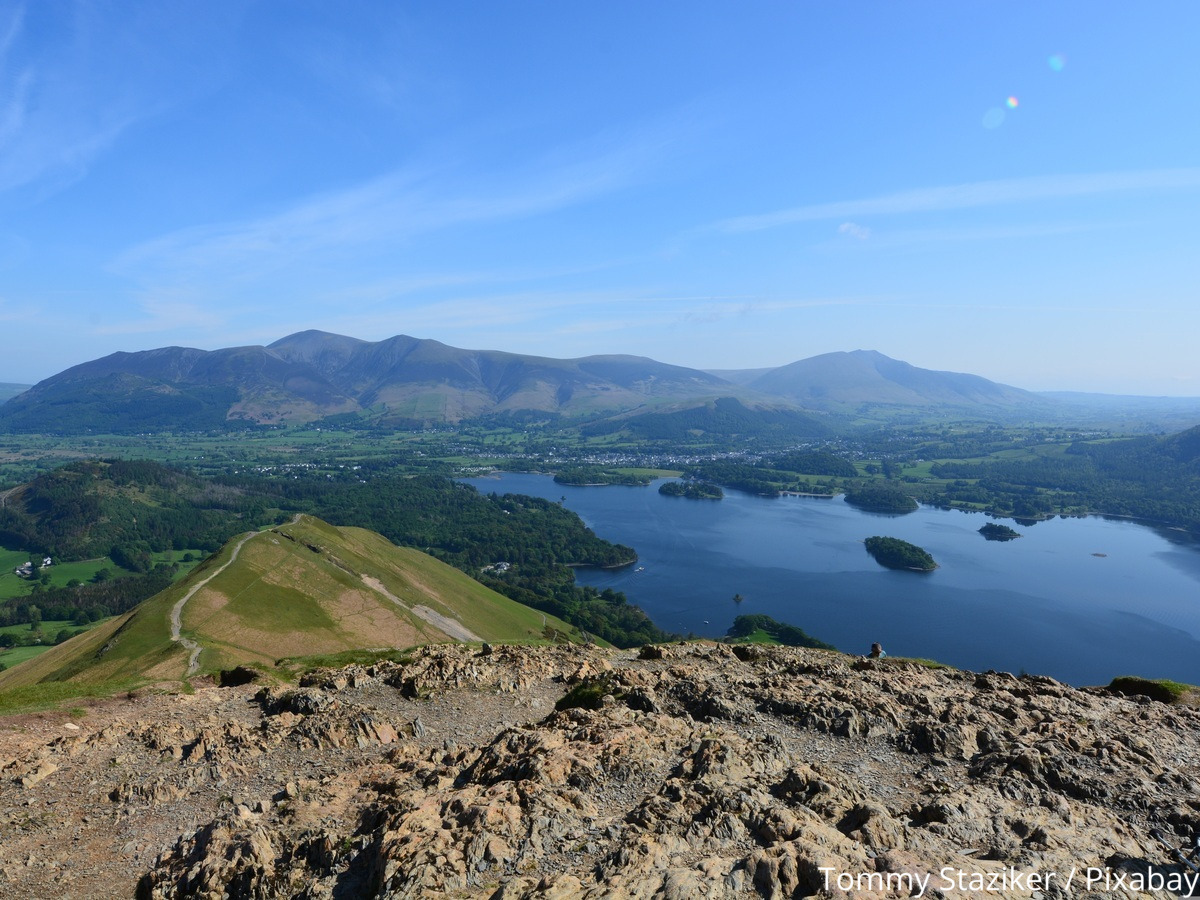
The Wainwright walks refer to the 214 fells of England’s Lake District National District that were catalogued and described by the celebrated guidebook author Alfred Wainwright. For many walkers, “bagging the Wainwrights” — reaching the summit of every fell on his list — has become one of the most popular and rewarding long-term hiking challenges in the UK.
Alfred Wainwright (1907–1991) was not a professional mountaineer but a self-taught fellwalker with a passion for the Lakeland landscape. After his first visit to the Lake District in the 1930s, he became captivated by its hills and spent decades exploring them in meticulous detail. Between 1955 and 1966, he produced his iconic seven-volume Pictorial Guide to the Lakeland Fells. Each hand-written and hand-drawn book contains detailed route descriptions, maps, sketches, and observations, reflecting both practical knowledge and deep affection for the area. His selection of 214 fells — now known simply as “the Wainwrights” — wasn’t based strictly on height or prominence, but on character, individuality, and what he felt made each summit worth visiting.
Some Wainwrights stand out for their scenery, history, or sheer walking pleasure. Scafell Pike, the highest mountain in England at 978 metres, is one of the most sought-after summits. The views across the surrounding peaks and down to Wast Water on a clear day are spectacular, and its status alone makes it a milestone for many walkers.

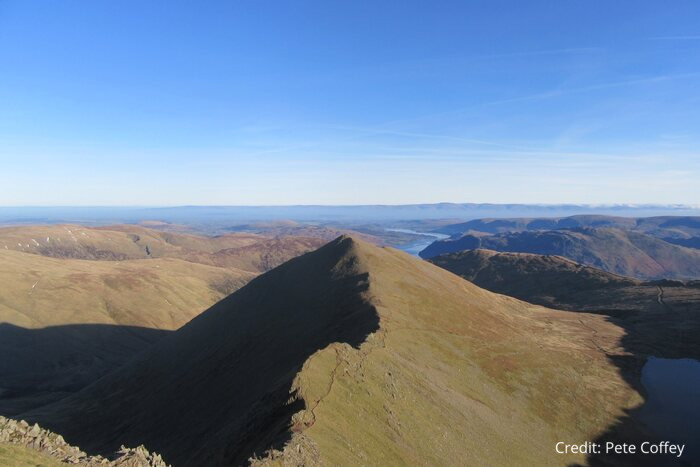
Another favourite is Helvellyn, approached via the famous Striding Edge. This airy ridge walk offers an exhilarating route with dramatic exposure and panoramic views over Ullswater and Thirlmere. It’s one of the Lake District’s most iconic mountain days.
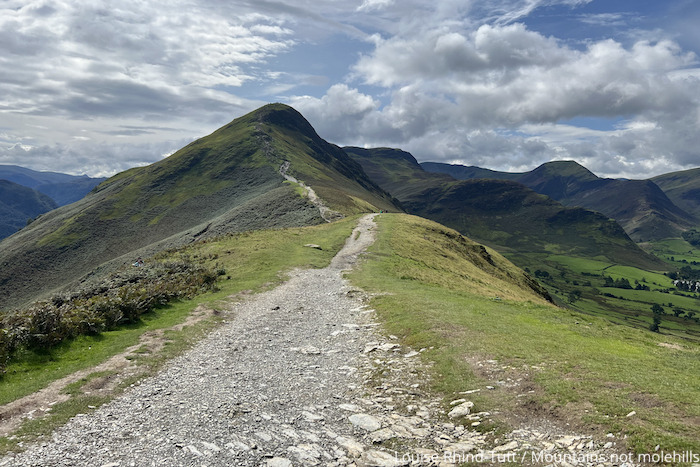
For a gentler but equally rewarding experience, Cat Bells near Keswick is often recommended. Though relatively low, it provides superb views over Derwentwater and the surrounding fells, making it a perfect introduction to Wainwright walking or a satisfying short outing.

One of the appealing aspects of collecting Wainwrights is that many can be completed in groups. The Lake District’s compact geography and interconnected ridges mean it’s often possible to “bag” several summits in a single walk. Classic examples include the Fairfield Horseshoe, which takes in eight Wainwrights in a sweeping circuit above Ambleside, or the Kentmere Horseshoe, another rewarding ridge route linking multiple peaks. Even shorter outings can be efficient: combining Cat Bells, Maiden Moor, and High Spy makes for an excellent ridge walk above Borrowdale.
Whether tackled one at a time or grouped into ambitious ridge days, the Wainwrights offer a structured way to explore the Lake District’s remarkable variety — from rugged mountain terrain to quieter, grassy outliers. More than just a checklist, they represent Alfred Wainwright’s enduring invitation to discover the landscape he loved, one fell at a time.


