
Kinder Scout in Winter: What Changes and What to Watch For
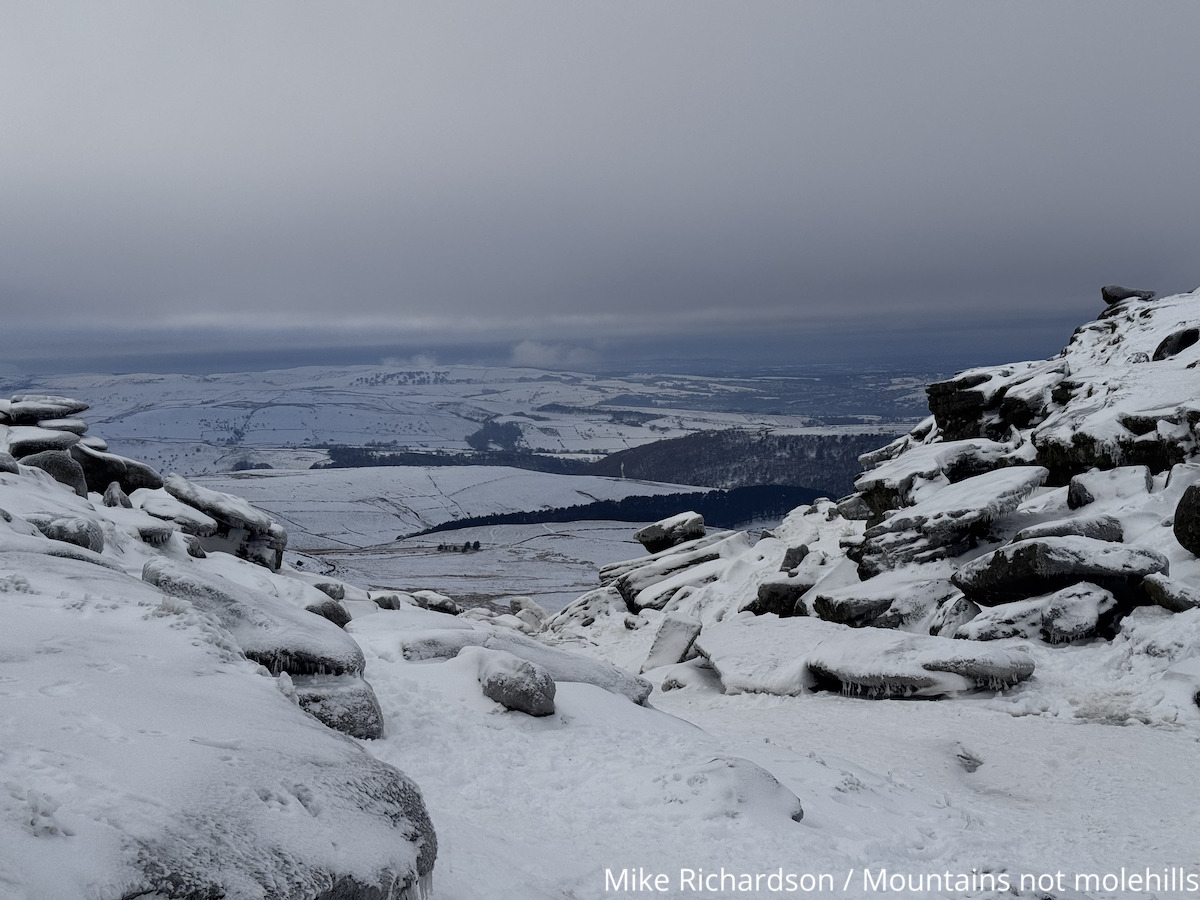
Kinder Scout is possibly the most popular walk in the Peak District. In summer, it’s busy and boggy — be it crowds gathering at the trig point or the sometimes seemingly endless line of racers heading along the plateau towards the Pennine Way. In winter, it becomes something else entirely. Kinder doesn’t suddenly turn into the Alps, but winter conditions are far less forgiving. The same routes are there, the same landmarks, the same views — when you can actually see them that is — yet the experience changes in ways that can catch out even experienced walkers.
This isn’t about scaremongering. It’s about understanding what’s different, and adjusting your expectations accordingly. In 2025 Kinder Mountain Rescue Team had 79 call outs in total for a wide range of incidents or accidents. It is too easy to think ‘it will never happen to me’, so understanding how Kinder changes in winter is essential to helping you to stay safe. It is also important to know how to call for help from the Mountain Rescue Teams in case you ever are in need of assistance.
Kinder Scout doesn’t look dramatic — until it is
One of Kinder’s defining features is how unremarkable it can look. There are no sharp ridges or obvious drops from a distance, like Helvellyn or Crib Goch. That can lull people into thinking winter conditions here are somehow gentler than on more dramatic hills. Kinder’s dangers are subtle: exposure, wind, navigation challenges, and ground conditions that shift dramatically with temperature. These challenges are difficult enough during the brighter warmer months,, and winter only magnifies all of these.

What changes on Kinder Scout in winter
1. Navigation becomes the main challenge
The Kinder plateau is famously broad and featureless. In summer, clear paths and visible edges often guide you without too much hassle. In winter, those cues disappear.
- Snow fills in paths and hollows
- Mist becomes more persistent
- Edges blur into the plateau
- Streams are hidden under snow or ice
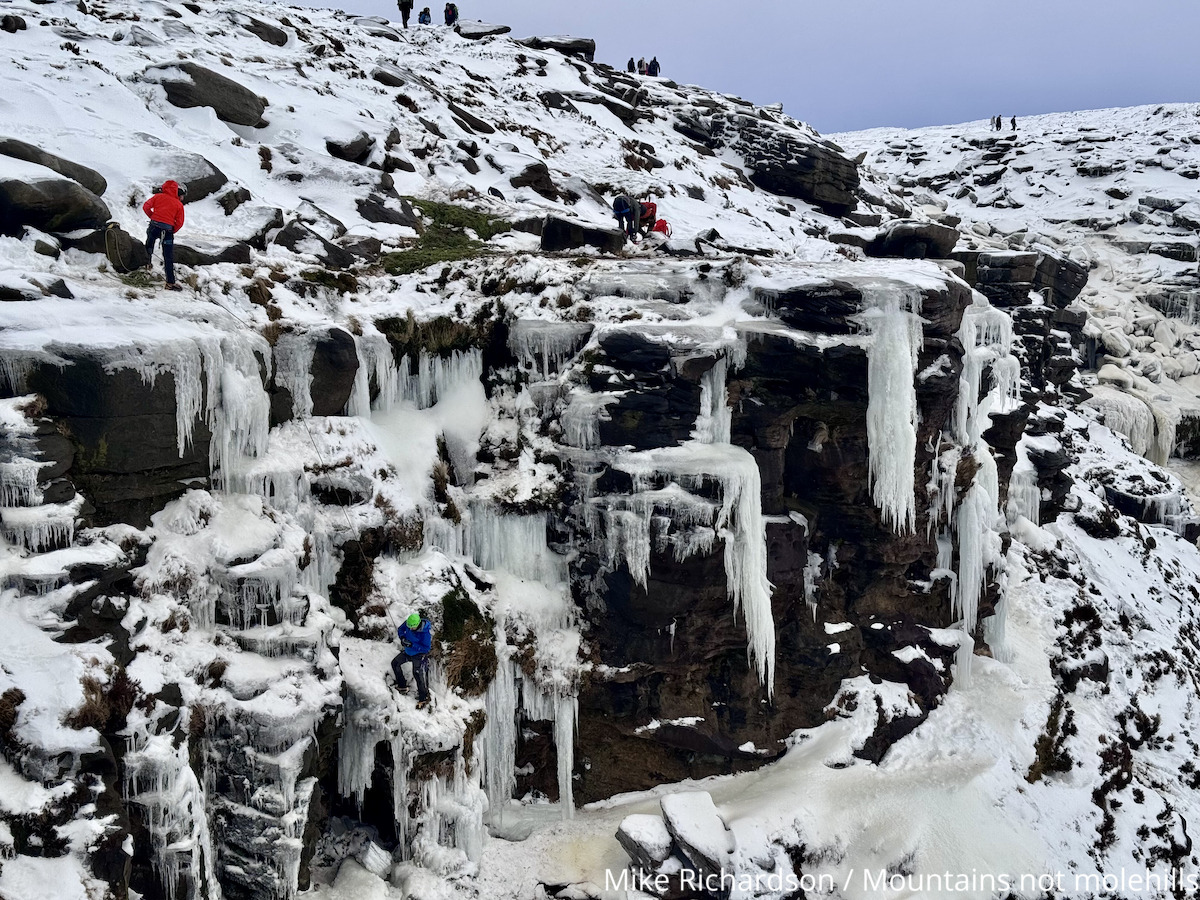
In poor visibility, it’s very easy to drift off course without realising. Heading even a few degrees off course over a short distance can put you heading towards steep drops like Kinder Downfall, Crowden Clough, or unfamiliar ground. A map and compass — and the ability to use them — are essential on Kinder at any time of year but particularly in winter.
2. Wind is often the biggest problem
Kinder is exposed from almost every direction, and winter winds can be relentless. Even on a day that feels manageable in the valley, the plateau can be bitterly cold, with wind chill turning a mild forecast into something far more serious.
Strong wind affects:
- Body temperature (rapid heat loss)
- Balance, especially near edges
- Decision-making (short tempers, rushed choices)
Stopping for breaks becomes harder, and standing still for navigation checks can quickly reduce your body temperature. With reduced breaks, not being able to get the right levels of hydration and fuel from snacks also increases the risk of injury or accidents.

3. Ground conditions are more unpredictable than they look
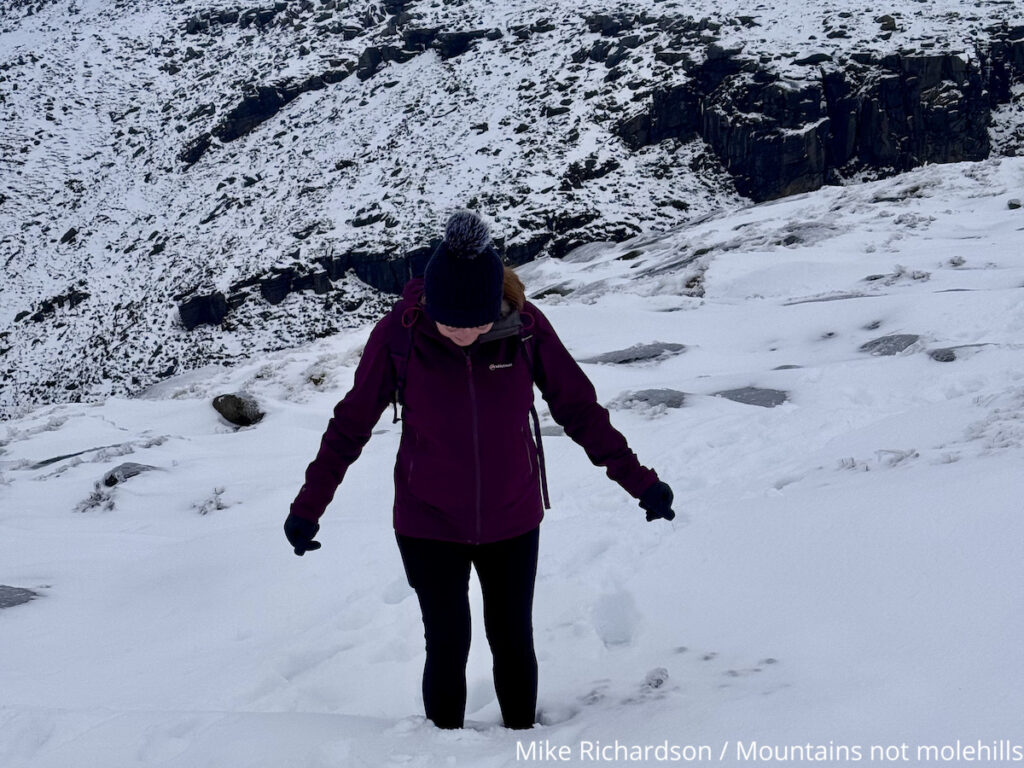
Kinder’s peat bogs don’t disappear in winter — they become deceptive. This one I can vouch for from personal experience after going knee-deep in bog in what appeared to be frosty solid ground conditions.
- Snow can bridge deep peat hags
- Frozen ground can thaw unexpectedly
- Ice forms on stone slabs and pitched paths
Just because a surface looks smooth and solid doesn’t mean that it is — carrying walking poles can be a good way to test the ground before committing to that step forward. Slips, soaked boots, and sudden cold feet are common winter experiences on Kinder Scout. Routes like Jacob’s Ladder and Kinder Downfall can become icy, especially after freeze-thaw cycles.
4. Time feels shorter
Winter days are short, and progress on Kinder in the winter can be painfully slow. A number of factors take Kinder from a comfortable summer circular to a winter walk that feels very tight timewise with daylight fading fast — headtorches aren’t optional extras — they’re essential.
The main factors affecting progress in winter are:
- Careful footing
- Navigation pauses
- Wind resistance
- Extra layers on and off
What to watch out for
1. Rapid weather changes
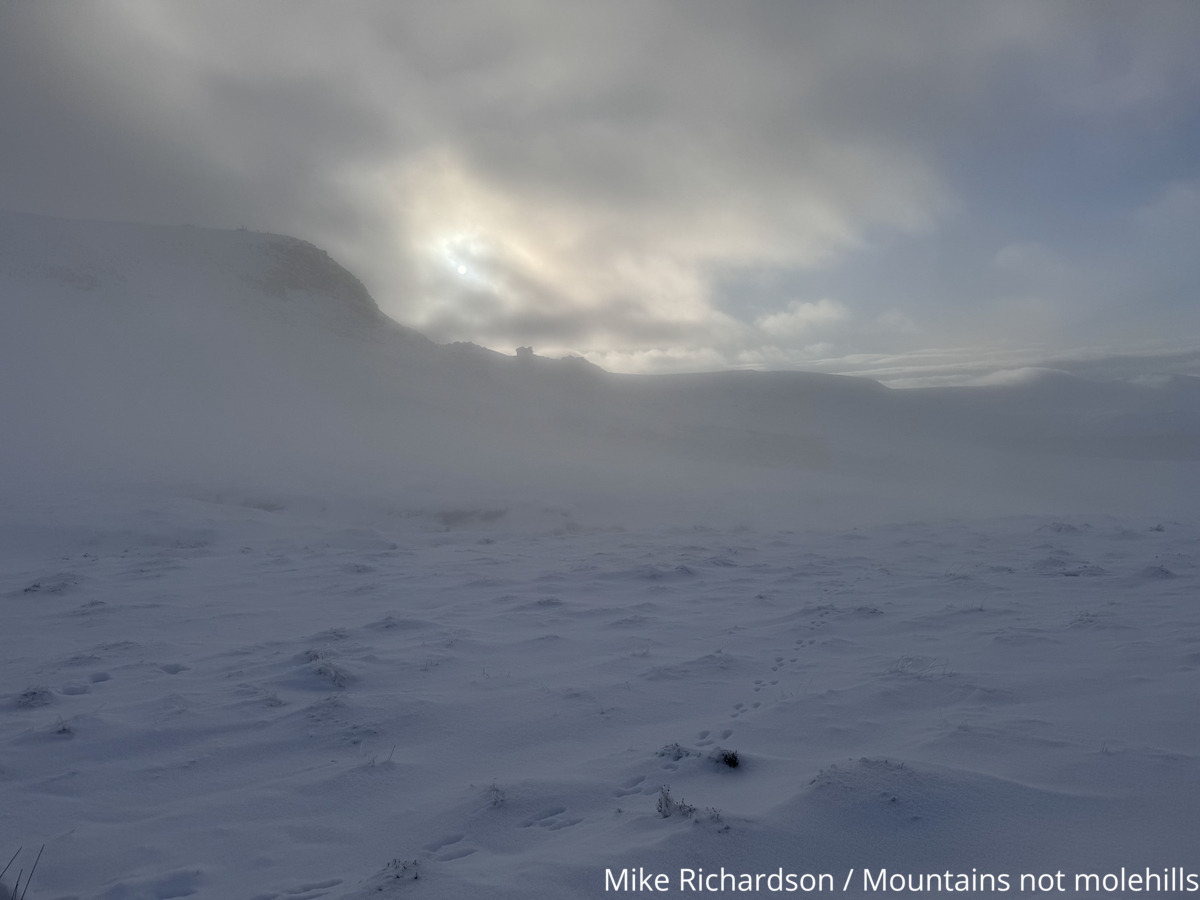
Kinder seems to make its own weather at times. On several instances now we have been hiking Kinder with frosty ground and bright blue skies, only to be submerged in cloud and mist moments later. It really is unbelievable just how quickly those changes can happen and when they do, being prepared for it goes a long way to staying safely on course. As with any walk, always assume conditions higher up will be worse than at the car park.
2. Cornices near edges
After heavy snow and strong winds, cornices can form along plateau edges. These overhanging lips of snow are extremely dangerous and often invisible from above. Keep well back from edges in snowy conditions, even where the ground appears flat and safe.
3. False confidence from familiar routes
Knowing Kinder well in summer doesn’t automatically translate to winter competence. Familiarity can breed complacency — “I know this path” — right up until the moment it disappears. Again I can speak from personal experience on this — the weather turned so badly once that it took me a good 15 minutes and veering quite off track before realising we were not heading in the right direction. On this occasion we were able to backtrack, regain our bearings and make it safely back down to the car.
Kinder in winter isn’t about conquering it
The best winter days on Kinder aren’t about reaching the trig or forcing your way up a route that clearly isn’t working. They’re about reading conditions, adapting plans, and sometimes choosing not to go all the way. Knowing when to ‘plough on or play safe’ and determining when to turn back early, take a lower route, or sticking to edges rather than the plateau isn’t failure — it’s good judgement. Kinder will still be there another day.
Why people keep coming back
Despite — or perhaps because of — these challenges, Kinder Scout in winter has a quiet power about it which brings people back time and time again. Winter allows the landscape to feel bigger and calmer without the crowds of summer. It can provide the perfect stress lowering mental break you didn’t know you needed.


